A torn cruciate ligament isn't only a big-dog problem. For smaller and less active dogs, extracapsular repair is a well-established, less invasive way to stabilize the knee and get them comfortably back on all four legs. Here's how it works and what recovery looks like.
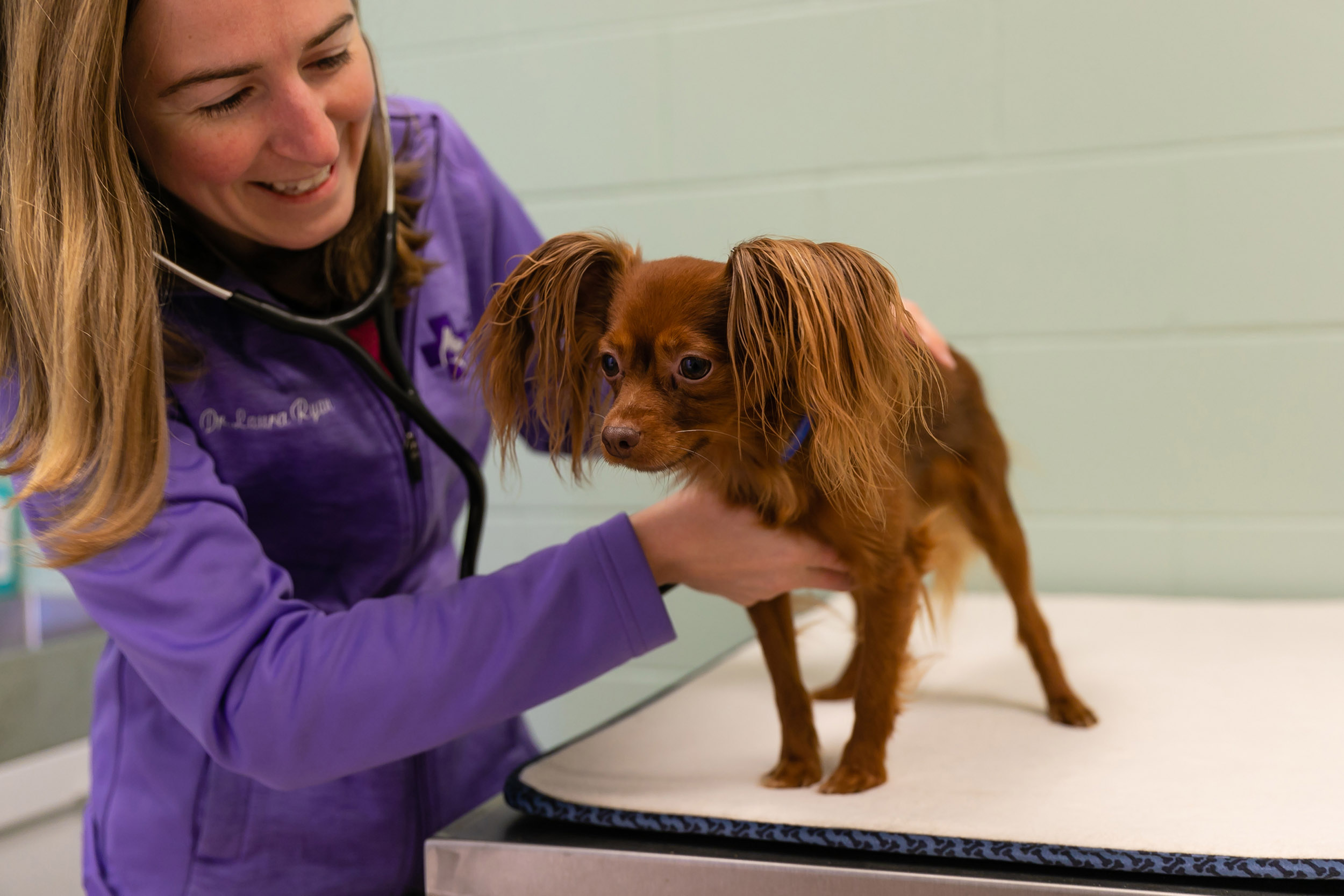
Some dogs injure the ligament during a burst of play and suddenly stop using the leg. In others, the limp creeps in slowly and seems to come and go. Keep an eye out for:
The cranial cruciate ligament keeps the shin bone from sliding forward under the thigh bone. Once it's damaged, it can't heal on its own, so the knee shifts with every step. Extracapsular repair replaces the ligament's job with a strong, specialised suture placed outside the joint. It's anchored behind the knee and passed through a small tunnel in the shin bone, following roughly the same line as the original ligament. Before placing it, we examine the inside of the joint and remove damaged ligament and any torn cartilage (meniscus), a common source of ongoing pain. Over the following months, the body lays down scar tissue around the suture, and that tissue provides the knee's long-term stability.
Your dog is under general anesthesia throughout, with pain management before, during and after surgery. Unlike TPLO, no bone is cut, which makes this a shorter, less invasive procedure. Most dogs go home 1–2 days after surgery.
Strict rest in a crate. Short, slow leash walks for bathroom breaks only, with no stairs, jumping or furniture. A cone keeps your dog from licking the incision, and skin sutures come out at around 10–14 days.
Continued crate confinement.
Restrictions are released slowly from there.
We may also recommend a course of Cartrophen injections. These help increase the amount of joint fluid in the joint space, repair cartilage, and get your dog moving around better with less pain.
We have a therapeutic red light laser, which can help with inflammation and speed up healing. We can do this immediately post-op and for the first two days in clinic, then once weekly or as needed during recovery.
The sections above cover what most owners need. If you'd like more detail, including how this surgery compares with TPLO and what affects long-term results, read on.
Both surgeries treat the same injury in different ways. TPLO changes the angle of the shin bone so the knee is stable without the ligament. Extracapsular repair stabilizes the knee with a suture instead. Smaller dogs put much less load through the knee, so extracapsular repair works reliably for them without cutting bone. Larger, younger and very active dogs have a higher rate of complications with extracapsular repair, so TPLO is usually the better choice for them. Some small dogs with an unusually steep shin bone angle may also do better with TPLO. We'll talk through which option fits your dog after the exam and X-rays.
Cruciate ligaments in dogs usually weaken gradually before they tear, rather than failing from one big injury. That means dogs who tear one ligament are more likely to have problems with the other knee later. We'll check both knees at every visit.
Some arthritis develops in any knee that has had a cruciate injury, whether or not it's repaired. Surgery reduces and slows it. Keeping your dog lean is one of the most helpful things you can do, because extra weight adds strain to the joint with every step. Joint-support diets or omega-3 supplements may also be worth discussing for long-term comfort.
Most dogs recover smoothly, but it's good to know what to watch for. The suture can stretch or break if a dog is too active before the scar tissue has formed, which is why the early rest period is so important. Less commonly, the incision can become infected, the body can react to the suture material, or the meniscus can tear weeks or months later. If your dog's limp suddenly gets worse at any point, call us so we can check it promptly.
Controlled exercise is part of recovery, not a break from it. Simple home exercises, and swimming or underwater treadmill work where available, help rebuild thigh muscle and joint movement. We'll suggest what's appropriate at each recheck.
Some very small dogs regain reasonable comfort with strict rest, weight control and pain management alone. The knee stays unstable, though, and arthritis tends to progress faster. It's a fair option to discuss if surgery isn't right for your dog, and we'll give you an honest view at your consultation.
Size is one factor, along with age, activity level and the shape of your dog's knee. After an exam and X-rays, we'll recommend the approach most likely to give your dog a good long-term result.
It's usually less than TPLO, but the cost depends on your dog's size and individual case. We'll give you a clear, itemized estimate at your consultation, before anything is scheduled.
Yes. Cruciate injuries are less common in cats but do happen, often in older or overweight cats. Extracapsular repair is frequently used when a cat needs surgery.
If it happens after the first couple of months, the scar tissue has usually taken over and the knee stays stable. If instability returns early, a second procedure may be needed. Call us if your dog's limp suddenly worsens.