Most dogs and cats give birth without any help. When labour stalls, or a pregnancy is known to be high-risk, a caesarean section (C-section) delivers the babies safely and protects the mother. Here's how to spot trouble, what surgery involves, and what to expect afterwards.
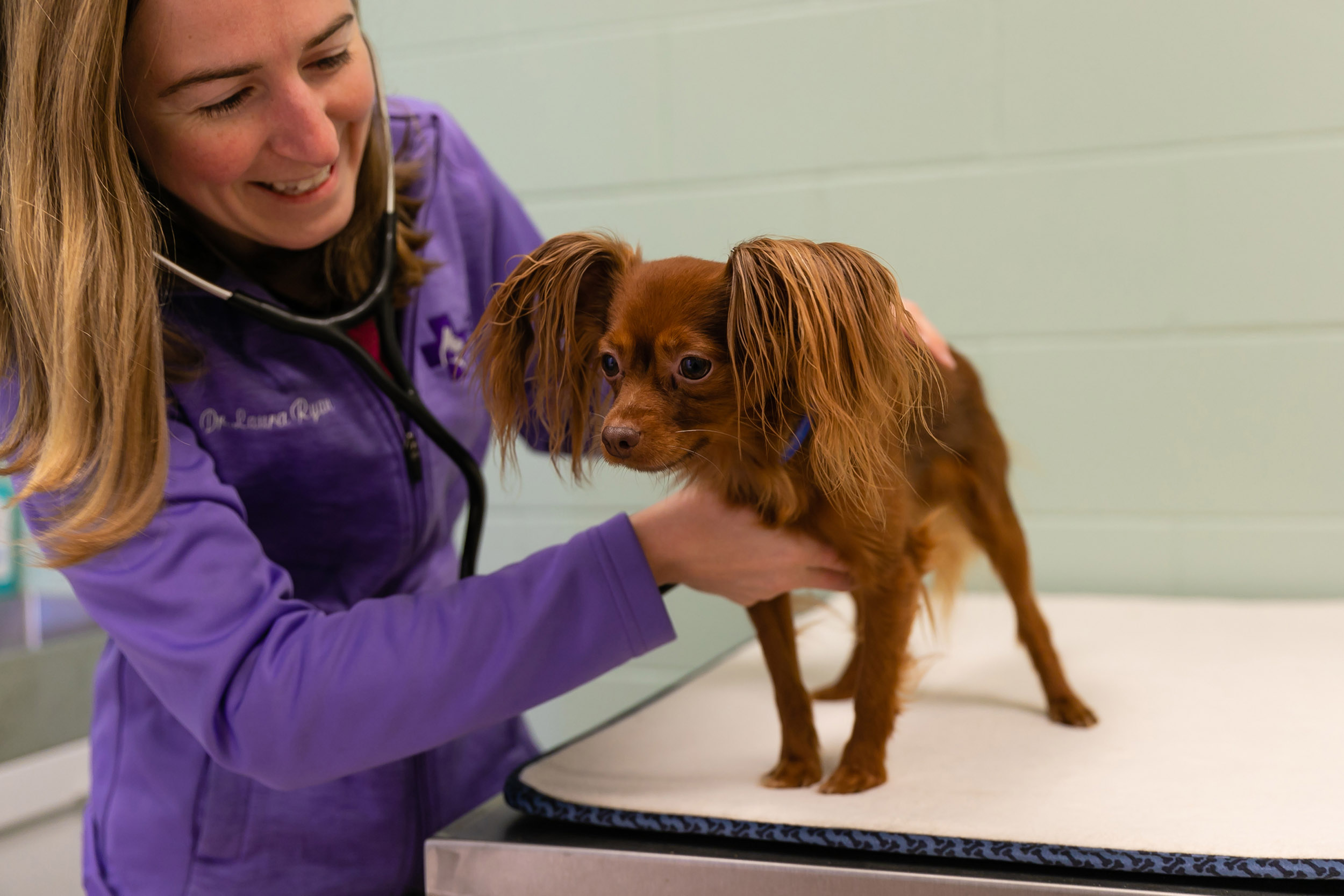
Timing matters for both mom and her babies. Call us immediately if you see:
First, we examine mom and take X-rays or an ultrasound to check how many babies remain, how they're positioned, and whether they're in distress. If the uterus has simply tired and nothing is blocking the way, medication can sometimes restart labour. If a baby is stuck, labour isn't progressing, or medication doesn't work, a C-section is the safest option. Under general anesthesia, the babies are delivered through an incision in the abdomen and uterus. Anesthetic drugs are chosen to limit their effect on the newborns, and our team is ready to clear airways, dry, warm and stimulate each baby as it's delivered.
Some pregnancies are best handled with a planned C-section, timed before labour starts. This is common for flat-faced breeds such as Bulldogs, French Bulldogs and Boston Terriers, and for mothers who've had a difficult birth before. If you're not planning future litters, spaying at the same time can be discussed. Most moms go home the same day with their babies once they're awake and nursing.
Mom may be drowsy for several hours, so supervise nursing and make sure she doesn't lie on the babies. Keep the whelping or kittening area warm and quiet, and check that every baby is nursing.
Check the incision daily. A reddish-brown vaginal discharge is normal for days to a few weeks. Leash walks only, with no jumping.
Recheck appointment. Any skin stitches come out at 14 days.
Mom returns to normal activity as the incision heals, and weaning begins at around 3–4 weeks.
Everything above covers what most owners need. If you're planning a litter or want to know more about the risks, this section walks through it.
Flat-faced breeds often need C-sections because the puppies' large heads don't fit easily through the birth canal. Risk is also higher for toy breeds, moms carrying a single large puppy, very large litters (where the uterus can tire), older or overweight mothers, and any mother who has had a C-section or difficult birth before.
If your dog is pregnant, book a pre-birth check. We recommend an X-ray at day 55 of pregnancy or later. This lets us count the puppies, so you'll know when labour is finished and when something's wrong. Knowing the expected due date matters too. In dogs, a noticeable drop in body temperature usually means labour is about a day away.
Newborns can't regulate their own body temperature, so keep them warm and dry. Make sure each baby nurses within the first few hours to get colostrum, the first milk, which carries important antibodies. Weighing them daily is the easiest way to spot one that isn't thriving.
Call us if mom has a fever, foul-smelling discharge, loses interest in food or her babies, or has hot, hard or painful mammary glands, which can indicate mastitis. Restlessness, panting, trembling or stiffness in the weeks after birth can signal eclampsia (dangerously low calcium). That's an emergency, so call right away.
Difficult births are less common in cats but do happen, especially in flat-faced breeds such as Persians. The warning signs and treatment are much the same as for dogs.
Yes. Most moms start nursing within hours of surgery, and we'll help get the babies latched before you go home.
Often, yes, though some dogs, especially flat-faced breeds, will need a planned C-section again. We'll talk through her individual situation.
Any babies already born (in a warm, towel-lined box), plus the date of breeding or your due date if you know it.
It depends on whether it's planned or an emergency, and on your pet's size. We'll give you a clear estimate as early as we can, including in emergencies.